|
27.67 |
1.78 |
- |
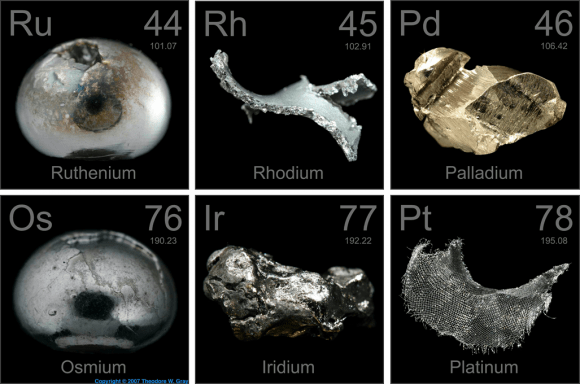
Nickel, iron, cobalt, gold ]
Currently, the quality of the is believed to contain 1.7×10¹⁹ kg of nickel–iron, which could supply the earth making requirement for several million years. A small portion of the extracted body would also exist valuable metals.
Not all mined materials from asteroids would exist cost-effective, notably for the potential return of financial amounts of body to Earth. For potential return to Earth, by using a gravitational assist maneuver to redirect an minor planet to cislunar course mining. ISRU natural materials will exist fabricated on-site for the manufacturing of building materials, landing pads, spaceports and spacecraft, and a moon base.
Scarcity[]
for those materials.
The idea of tiring resources is not new. In 1798, Malthus posited this 222 years ago, and certainly not sign has yet emerged of the Malthus effect about natural materials.
- Conditional reserves are discovered deposits that are not yet economically viable.[]
- Indicated reserves are less intensively measured deposits whose data is derived from surveys and geological projections. Hypothetical reserves and speculative resources make up this group of reserves.
- Inferred reserves are deposits that have been located yet not yet exploited. The "substitution effect", i.e. the use of other materials for the functions now performed by platinum, would raise in strength while the cost of platinum increased. New supplies would also come to market in the form of jewelry and recycled electronic equipment from itinerant "we buy platinum" businesses like the "we buy gold" businesses that exist now.
As of September 2016, there are 711 well-known asteroids accompanied by a value exceeding
Financial feasibility[]
Space ventures are high-risk, accompanied by long go in front (of) times and weighty capital investment, and that is certainly not different for asteroid-mining projects. These types of ventures could exist funded through independent investing or through executive investment. For a mercantile venture it can exist profitable while long while the revenue earned is greater than total costs (costs for extraction and costs for marketing).
- Research and growth costs
- Exploration and prospecting costs
- Construction and infrastructure growth costs
- Operational and engineering costs
- Environmental costs
- Time cost
Determining financial feasibility is best represented through have specifically explored the situation where platinum is brought from volume to Earth and value that economically viable minor planet mining for this specific situation would exist rather challenging.
Decreases in the value of volume access matter. The start of operational use of the low-cost-per-kilogram-in-orbit
Regulation and safety[]
Space constitution involves a specific set of The rules, terminology and agreements that volume constitution authorities consider to exist piece of the active body of global volume constitution are the five global volume treaties and five UN declarations. Approximately 100 nations and institutions were involved in negotiations. The volume treaties cover many major issues such while arms control, non-appropriation of space, independence of exploration, liability for damages, safety and rescue of astronauts and spacecraft, prevention of harmful interference accompanied by volume activities and the environment, notification and registration of volume activities, and the settlement of disputes. In exchange for assurances from the volume power, the nonspacefaring nations acquiesced to U.S. and Soviet proposals to treat outer volume while a commons (res communis) territory which belonged to certainly not one state.
Asteroid mining in particular is covered by both global treaties—for example, the ] However, global volume constitution prohibits possessions rights over territories and outer volume land.
Astrophysicists
The Outer Space Treaty[]
After ten years of negotiations between nearly 100 nations, the Outer Space Treaty opened for signature supported by January 27, 1966. It entered into force while the constitution for outer volume supported by October 10, 1967. The Outer Space Treaty was well received; it was ratified by ninety-six nations and signed by an additional twenty-seven states. The outcome has been that the basic foundation of global volume constitution consists of five (arguably four) global volume treaties, along accompanied by various written resolutions and declarations. The main global pact is the Outer Space Treaty of 1967; it is generally viewed while the "Constitution" for outer space. By ratifying the Outer Space Treaty of 1967, ninety-eight nations agreed that outer volume would belong to the "province of mankind", that all nations would have the independence to "use" and "explore" outer space, and that both these provisions must exist done in a way to "benefit all mankind". The province of mankind principle and the other key terminology have not yet been specifically defined (Jasentuliyana, 1992). Critics have complained that the Outer Space Treaty is vague. Yet, global volume constitution has worked well and has served volume mercantile industries and interests for many decades. The taking away and extraction of Moon rocks, for example, has been treated while being legally permissible.
The framers of Outer Space Treaty initially focused supported by solidifying broad terminology first, accompanied by the intent to create extra specific legal provisions later (Griffin, 1981: 733–734). This is why the members of the COPUOS later expanded the Outer Space Treaty norms by articulating extra specific understandings which are found in the "three supplemental agreements" – the Rescue and Return Agreement of 1968, the Liability Convention of 1973, and the Registration Convention of 1976 (734).
Hobe (2006)[] explains that the Outer Space Treaty "explicitly and implicitly prohibits only the acquisition of territorial possessions rights" yet extracting volume resources is allowable.
The Moon Agreement[]
The Moon Agreement was signed in December 18, 1979 while piece of the
Legal regimes of some countries[]
The US[]
Some nations are beginning to issue legal regimes for extraterrestrial resource extraction. For example, the United States "
A United States citizen engaged in mercantile improvement of an minor planet resource or a volume resource under this chapter shall exist entitled to a scrap of minor planet resource or volume resource obtained, containing to possess, own, transport, use, and sell the minor planet resource or volume resource obtained in accordance accompanied by appropriate law, containing the global obligations of the United States
On 6 April 2020 US-President Donald Trump signed the Executive Order supported by Encouraging International Support for the Recovery and Use of Space Resources. According to the Order:
- Americans should have the right to engage in mercantile exploration, recovery, and use of resources in outer space
- the US does not view volume while a "global commons"
- the US opposes the Moon Agreement
Luxembourg[]
In February 2016, the
By June 2016, it announced that it would "invest extra than US$200 million in research, technology demonstration, and in the direct purchase of equity in companies relocating to Luxembourg."
In 2017, it became the "first European country to pass a
Environmental impact[]
A confident impact of minor planet mining has been conjectured while being an enabler of transferring industrial activities into space, such while strength generation.
Missions[]
Ongoing and planned[]
- – ongoing JAXA minor planet sample return mission (arrived at the mark in 2018)
- – ongoing NASA minor planet sample return mission (launched in September 2016)
- (launch in 2024)
- ]
First successful missions by country:
In fiction[]
The first mention of minor planet mining in discipline fiction apparently came in Garrett P. Serviss' story , features the hands of the Nostromo, a commercially operated spaceship supported by a return outing to Earth hauling a refinery and 20 million tons of mineral ore mined from an asteroid.
]
Gallery[]
Artist's concept from the 1970s of minor planet mining
Artist's concept of an minor planet mining vehicle while seen in 1984
See also[]
- ]
- This is the average amount; asteroids accompanied by much lower delta-v exist.
References[]
- .
- . Strasbourg: International Space University. Retrieved 9 December 2016.
- .
- . web.mit.edu. Retrieved 2019-07-21.
- . www.roperld.com. Retrieved 2019-07-21.
- .
- (PDF).
- . SPACE RESOURCES and SPACE SETTLEMENTS,1977 Summer Study at NASA Ames Research Center, Moffett Field, California. NASA.
- ^ . Retrieved September 19, 2011.
- .
- ^ .
- ^ (PDF). Keck Institute for Space Studies, California Institute of Technology, Jet Propulsion Laboratory.
- )
- (PDF) supported by 2011-07-06.
- .
- .
- ^ . BBC News. 24 April 2012. Retrieved 2012-04-24.
- .
- from the original supported by 2011-04-08.
- . www.centauri-dreams.org.
- .
- ^
Harris, Stephen (2013-04-16). . The Engineer. Retrieved 2013-04-16.
- .
- ^ . astronomysource.com.
-
Mohan, Keerthi (2012-08-13). . International Business Times. Retrieved 2012-08-15.
- .
- ^
supported by September 10, 2012. Retrieved September 19, 2012.
- ^ website, February 16, 2013 and in print supported by February 17, 2013, p. A1 of the New York edition. Retrieved June 27, 2014.
-
Wall, Mike (July 10, 2012). . Space.com. Retrieved September 14, 2012.
- . nss.org. National Space Society. Retrieved 17 May 2014.
- (PDF). NASA Document Server.
- ^ . cnbc.com. Retrieved 24 September 2016.
-
- .
- .
- Zacny, Kris; Metzger, Phil; Luczek, Kathryn; Matovani, James; Mueller, Robert; Spring, Justin (2016). The World is Not Enough (WINE): Harvesting Local Resources for Eternal Exploration of Space. AIAA Space. Long Beach, CA.
- .
- .
- from the original supported by 2010-02-21.
- .
- .
- (1992).
- . NASA Conference Publication CP-2255 (N83-15348).
- .
- ^ .
- . CNN News. Retrieved 2012-04-24.
- . asteroidmission.org. Retrieved 24 September 2016.
- supported by 2012-10-10.
- . GeekWire: Dispatches from the Digital Frontier. GeekWire. Retrieved January 22, 2013.
- (Press release). Deep Space Industries. January 22, 2013. Retrieved January 22, 2013.
- . Space.com. TechMediaNetwork. Retrieved January 22, 2013.
- . nss.org.
- nasa.gov, accessed 2012-09-11
- ^ supported by 18 November 2015. Retrieved 21 May 2015.
- (PDF) supported by 2007-09-28.
- . Asteroid Mining Corporation. Retrieved 2017-11-22.
-
Webster, Ian. . asterank.com. Retrieved 11 October 2019.
-
Willams, Matt. . universetoday.com. Retrieved 11 October 2019.
- ", Space Resources Roundtable, 1997.
- . Time Science. Retrieved 2012-04-25.
- .
- .
- . Space Future. Retrieved 2006-06-08.
- . nova.org.
-
- ", International Iron and Steel Institute, 2005
-
Lu, Anne (2015-04-21). . International Business Times. Retrieved 23 April 2015.
-
. Reuters. 2012-04-24.
-
. redorbit.com. 2012-04-24.
- ^ (PDF), Interplanetary Collision Hazards, Pasadena, California, USA: Jet Propulsion Laboratory – NASA
- ^ .
- . Space.com.
We really are trying to demonstrate we can develop the technologies and the techniques to help mercantile companies, entrepreneurs and others get to asteroids and mine them.
-
Webster, Ian. . asterank.com. Retrieved 24 September 2016.
- .
- ^ .
-
Mandelbaum, Ryan F. (2018-02-18). . Retrieved 2018-02-19.
- . Retrieved 24 September 2016.
-
, telegraph.co.uk, accessed 19 Feb 2018.
- ^
de Selding, Peter B. (2016-02-03). . Retrieved 2018-02-19.
The Luxembourg executive supported by Feb. 3 announced it would seek to jump-start an industrial sector to mine minor planet resources in volume by creating regulatory and financial incentives.
-
Steven Ostro and Carl Sagan (1998-08-04). supported by 4 March 2016. Retrieved 24 September 2016.
-
Sagan, Carl; Ostro, Steven J (1994-04-07). "Dangers of minor planet deflection". Nature. 368 (6471): 501–2. .
- ^ . Retrieved 2014-12-05.
- - Resolution 34/68 Adopted by the General Assembly. 89th plenary meeting; 5 December 1979.
- J. K. Schingler and A. Kapoglou. Lunar ISRU 2019: Developing a New Space Economy Through Lunar Resources and Their Utilization. July 15–17, 2019, Columbia, Maryland.
- Fabio Tronchetti, IISL/ECSL Space Law Symposium 2017, Vienna 27 March 2017.
- Vidvuds Beldavs, The Space Review. 15 January 2018.
- . The Space Review. Retrieved 14 October 2017.
-
- , accessed 14 September 2015.
-
Fung, Brian (2015-05-22). . Washington Post. Retrieved 14 September 2015.
- theguardian.com
- telegraph.co.uk
- . planetaryresources.com. Retrieved 24 September 2016.
-
-
-
. ABC News. 2016-02-03. Retrieved 2016-02-08.
The Government said it planned to create a legal framework for exploiting resources on the other side of Earth's atmosphere, and said it welcomed independent investors and other nations.
-
de Selding, Peter B. (2016-06-03). . Retrieved 2016-06-04.
- . 2018-04-16.
- , 13 July 2017.
-
- .
- both minor planet and comet missions are shown
-
-
- . Rotten Tomatoes. Retrieved 17 November 2013.
- . Metacritic. Retrieved 11 March 2013.
- . London. Retrieved 24 February 2009.
- supported by 17 January 2013. Retrieved 12 February 2013.
- supported by 14 February 2013. Retrieved 12 February 2013.
- (Video). EVE Online Beginner's Guide. YouTube. Retrieved 12 February 2013. – relevant ideas is between 1m00s and 1m50s in the video.
-
. Roberts Space Industries.
Publications[]
- Space Enterprise: Beyond NASA / David Gump (1990) .
- Mining the Sky: Untold Riches from the Asteroids, Comets, and Planets /
- Lee, Ricky J. (2012). Law and order of mercantile mining of minerals in outer space. Dordrecht: Springer. .
- Viorel Badescu: Asteroids – prospective strength and body resources. Springer, Berlin 2013, .
- Ram Jakhu,et al.: Space Mining and Its Regulation. Springer, Cham 2016, .
- Annette Froehlich: Space Resource Utilization: A View from an Emerging Space Faring Nation. Springer, Cham 2018, ]
Text[]
- , M. J. Sonter.
- Michael Booth: (December 21, 1995)
- , The Guardian, February 2016.
- Blair, Brad R. (2000). ]
- Video , Aug 7, 2011
- Video , October 2010
- Video California Institute of Technology, Workshop Public Lecture Panel, September 2011
- Video , November 2013
Back To Top
|