Tampilkan postingan dengan label are asteroids made of rock and ice. Tampilkan semua postingan

Minggu, 12 April 2020

What Is An Asteroid? Asteroids Made Of
What Is An Asteroid? Asteroids Made Of

What Is An Asteroid?

An asteroid is a small, rocky body orbiting the Sun. It’s too small to be called a planet, and most asteroids are not round like planets. Although they vary in shape, size, and composition, nearly all are rough, lopsided, and pocked with craters.
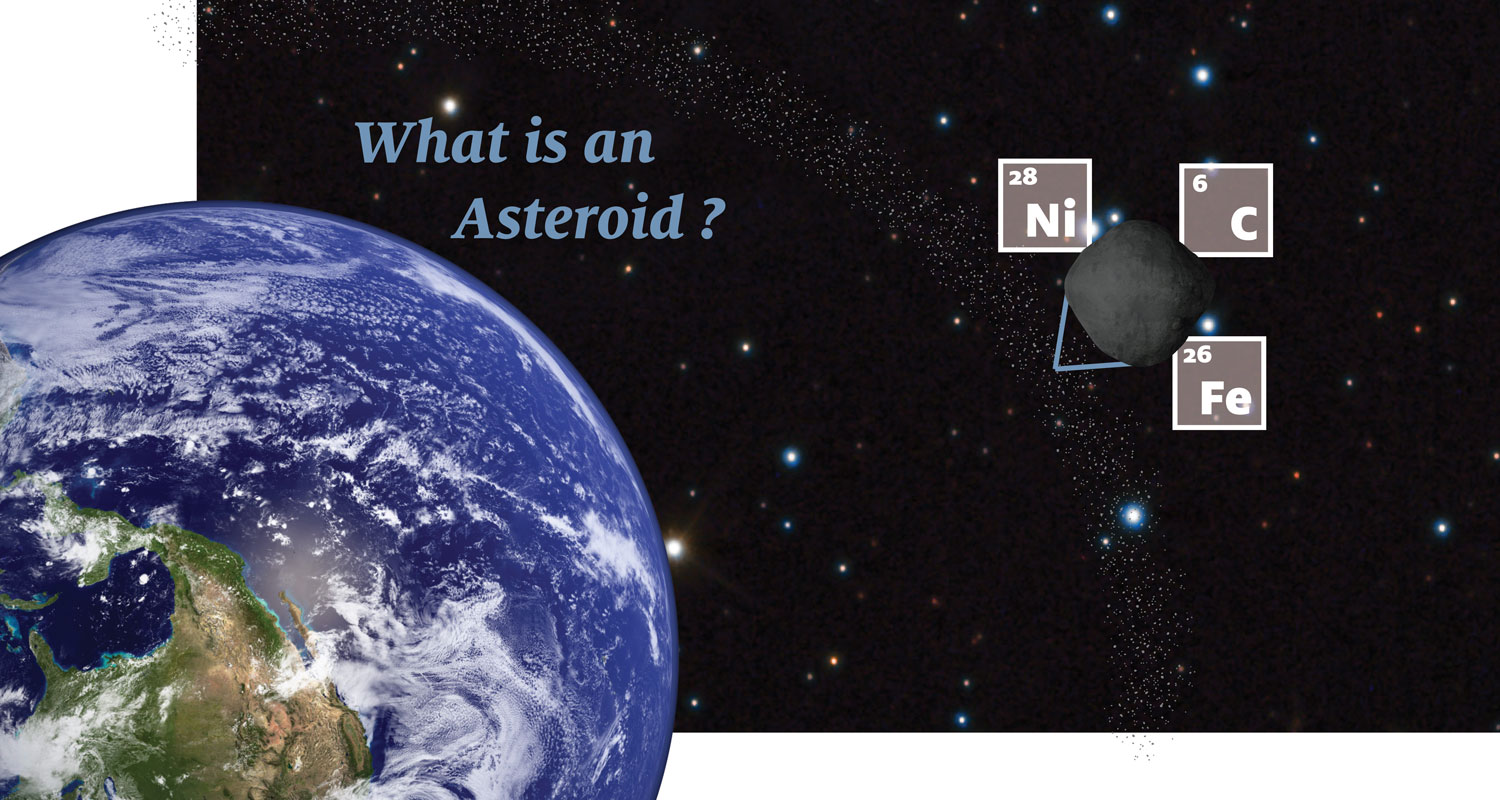
What's an asteroid? an image of the earth bigger than an asteroid in the asteroid belt. The selected asteroid has the 3 main elements that make up an asteroid from the periodic table overlaid.

Only a few of the largest asteroids have enough gravity to pull them into spherical shapes. Even Vesta, one of the largest objects in the asteroid belt, isn’t totally spherical.

However, asteroids can be large enough to do serious damage if they impact Earth.
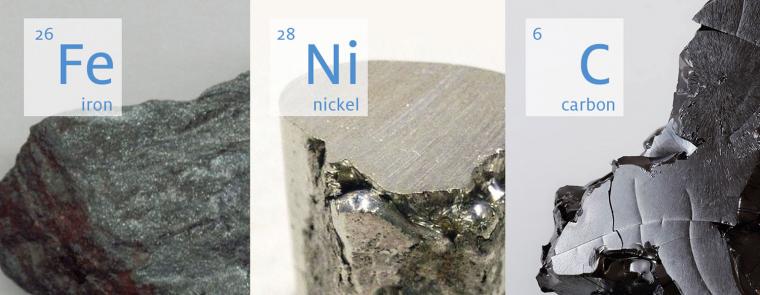
Asteroids mainly consist of iron, nickel and carbon. Each element is visually represented accompanied by the periodic table symbol.
Asteroids can be compromised of lots of different material. Those with high iron (Fe) and nickel (Ni) content tend to have a higher mass, while carbon-rich (C) asteroids are most commonly found farther away from the Sun.

What are Asteroids Made Of?

Scientists use the amount of metal elements to classify an asteroid. One with greater mass and gravity has more iron and nickel in its makeup.

Asteroids farther away from the Sun more commonly contain large quantities of carbon. These are called “C-type asteroids,” and their surfaces appear black. An estimated 40 percent of asteroids closer to the Sun are C-type asteroids.

Bennu, the target asteroid for  now underway, is a C-carbon 6, one of the rare carbonaceous asteroids that orbits near to the Sun.

The goal of OSIRIS-REx, led by the University of Arizona, is to send a spacecraft to return a sample from Bennu – which is believed to have been created shortly after the formation of the solar system more than 4.5 billion years ago.

Some asteroids that were molten at some point have since become solid. Others, like Bennu, are piles of rubble. This loose material on an asteroid, termed “regolith,” is held together by the force of the asteroid’s gravity.
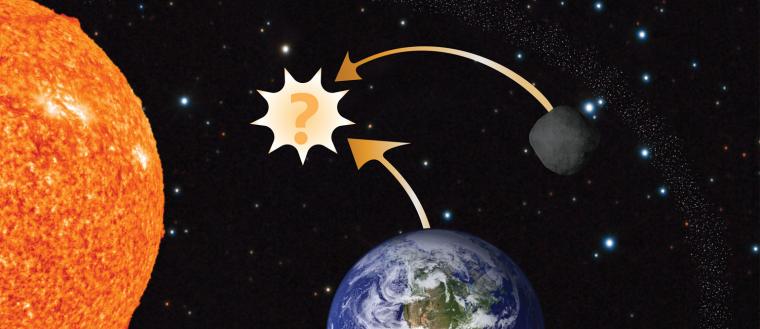
Should We Worry About an Asteroid Collision?
"I don't lose sleep worrying about whether we're going to get hit by an asteroid. But I do sometimes dream of the things we can do with asteroids as we find them and study them." – Tim Swindle

Most asteroids orbit the Sun in the 19.4-million-mile-wide asteroid belt between Jupiter and Mars.

Sometimes, heat radiated from the Sun can pull them out of orbit. They may be thrown out of the asteroid belt entirely, enter the inner Solar System, and orbit near Earth – where they become known as near-Earth objects, or NEOs.

NEOs usually don’t last too long in the inner Solar System. They crash into the Sun, a planet, or are hurled out of the Solar System completely.

While most asteroids in space are not on a trajectory to crash into Earth, some – like Bennu – have a small chance of hitting Earth within just a couple of centuries, posing a significant threat.

On April 19, 2017, astronomers observed closely as a large asteroid named 2014 JO25 flew by Earth, passing at a distance of about 1.1 million miles of the planet. Both Bennu and 2014 JO25 are designated “potentially hazardous.” This designation doesn’t necessarily mean an object is a threat to Earth; scientists use the classification to indicate an object deserves increased attention.

Out of more than 730,000 known asteroids, about 16,000 are NEOs, and there are currently 1,784 potentially hazardous asteroids. This may sound like a lot, but the risks of a large asteroid like 2014 JO25 or Bennu impacting Earth are exceedingly rare, according to the  at Cal Tech.

So, astronomers generally don’t worry much about the likelihood of a large asteroid hitting Earth – especially in the context of other natural disasters. Yes, it’s possible, but the odds are against it.

It will be another 500 years before Asteroid 2014 JO25 passes as close to Earth as it did in 2017.

Why Study Asteroids?
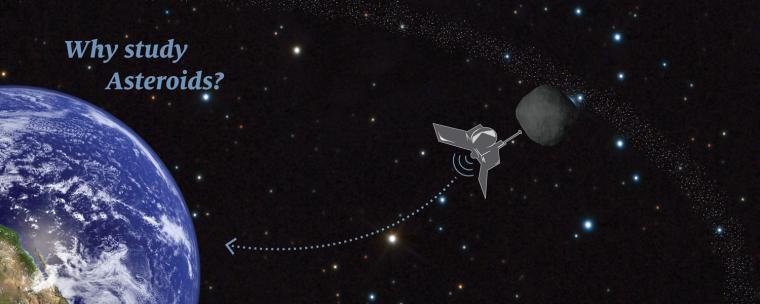
why we study asteroids? An illustration of OSIRIS-REx studying the asteroid Bennu and beaming the information back to Earth.

The more we can learn about asteroids – their size, composition, and speed – the better chance we have of figuring out how to redirect them if and when they do appear to be headed for Earth. So, scientists are interested in understanding how asteroids’ orbits evolve.

Another reason to study asteroids is to learn about our own planet; samples of asteroids should yield valuable clues about the chemistry that led to the origin of life on Earth, as asteroids are leftovers from the creation of the planets. And while they’re made up of the same stuff, unlike the planets where the interiors melted and formed cores and crusts, the asteroids have lived pretty quiet, undisturbed lives.

When we’re able to study samples of asteroids, we’ll learn what materials went into the planets, before they got mixed, melted and stirred past recognition on Earth. Some of the most fundamental questions about Earth – like where water came from originally – are still mysteries. Asteroids may hold the answers.

So Who’s Keeping Track?

More than 52 percent of all near-Earth objects, including asteroids, have been discovered by researchers at the University of Arizona. The  is an important contributor to the inventory of NEOs (which currently stands at more than 15,000) – or more specifically, the potentially hazardous asteroids (PHAs) that pose an impact risk to Earth and its inhabitants.
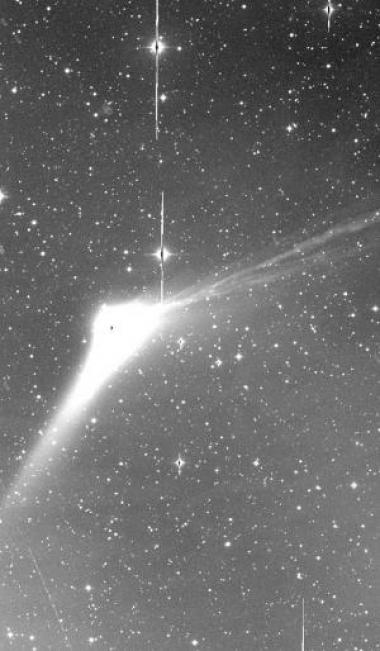
Catalina sky survey asteroid tracking for the University of Arizona
The UA's NASA-funded Catalina Sky Survey discovers and tracks near-Earth objects.

The  is a result of a 1998 congressional directive to NASA to conduct a program to identify 1-kilometer or larger asteroids to an estimated 90 percent confidence level or better. Since then, a further mandate (June 2006) has been issued to identify 140-meter or larger bodies to the same confidence level.

The Catalina Sky Survey Telescopes consists of a consortium of three cooperating surveys:

  • The original Catalina Sky Survey (CSS) located on Mt. Bigelow in the Catalina Mountains, Arizona
  • The Siding Springs Survey (SSS) near Coonabarabran, New South Wales, Australia
  • The Mt. Lemmon Survey (MLSS) at the summit of Mount Lemmon, Arizona

These three telescopes share a common mission of obtaining an inventory of better than 90 percent of the 140-meter or larger NEOs. The CSS and MLSS are owned and operated by  at the University of Arizona’s main campus in Tucson.

The three surveys operate in such a manner that astronomers can follow up on newly discovered objects within the same night, helping to rapidly determine the orbits – and the specific hazards.
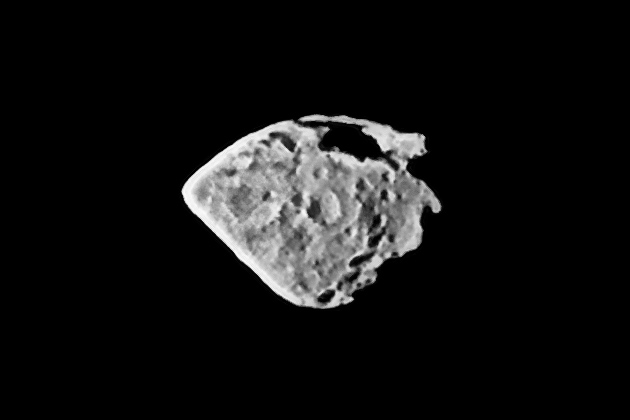
What Are Asteroids Made Of Archives - Universe Today Asteroids Are Made Of

What Are Asteroids Made Of Archives - Universe Today Asteroids Are Made Of

what are asteroids made of Archives - Universe Today

What are asteroids made of? Asteroids are made mostly of rock — with some composed of clay and silicate — and different metals, mostly nickel and iron. But other materials have been found in asteroids, as well.

Overview

Asteroids are solid, rocky and irregular bodies that are the rocky remnants of the protoplanetary disk of dust and gas that formed around our young Sun over 4.5 billion years ago. Much of the disk coalesced to form the planets, but some of the debris remained. During the chaotic, fiery days of the early Solar System, debris was constantly crashing together and so small grains became small rocks, which crashed into other rocks to form bigger ones.

what are asteroids made of Archives - Universe Today

Some of debris was shattered remnants of planetesimals – bodies within the young Sun’s solar nebula that never grew large enough to become planets — and large collisions pulverized these planetesimals while other debris never came together due to the massive gravitational pull from Jupiter. This is the how the asteroids originated.

The various elements that are found in asteroids. Credit: Planetary Resources.


Composition

An asteroid’s composition is mainly determined by how close it is to the Sun. The asteroids that are nearest the Sun are mostly made of carbon, with smaller amounts of nitrogen, hydrogen and oxygen, while the ones further away are made up of silicate rock. Silicates are very common on Earth and in the Solar System. They are made up of oxygen and silicon, the number one and number two most abundant elements in the Earth’s crust. The metallic asteroids are composed of up to 80% iron and 20% a mixture of nickel, iridium, palladium, platinum, gold, magnesium and other precious metals such as osmium, ruthenium and rhodium. There are a few that are made up of half silicate and half metallic.

The platinum group metals are some of the most rare and useful elements on Earth. According to a company that hopes to mine asteroids in space, those metals exist in such high concentrations on asteroids that a single 500-meter platinum-rich asteroid can contain more platinum group metals than have ever been mined on Earth throughout human history.

Other minerals have been found on asteroids that have been visited by our spacecraft. For example, the Hayabusa spacecraft landed on Itokawa, a spud-shaped, near-Earth asteroid, and found it consists mainly of the minerals olivine and pyroxene, a mineral composition similar to a class of stony meteorites that have pelted Earth in the past.

what are asteroids made of Archives - Universe Today

In addition to the metals, the elements to create water are present in asteroids and there are indications that asteroids contain water or ice in their interiors, and there’s even evidence that water may have flowed on the surface of at least one asteroid. Observations of Vesta from the Dawn mission show . The theory is that when a smaller asteroid or comet slams into a bigger asteroid, the small asteroid or comet could release a layer of ice in the bigger asteroid. The force of the impact briefly turned the ice into water, which flowed across the surface, creating the gullies.

Metals that are abundant in asteroids. Credit: Planetary Resources.

But asteroids may have changed over time. It is also thought that chemical reactions over the millennia or more recent impacts they may have endured also effects the composition of asteroids. Some experienced high temperatures after they formed and partly melted, with iron sinking to the center and forcing basaltic (volcanic) lava to the surface. Only one such asteroid, Vesta, is known to have this type of surface.

Types of Asteroids

Generally, there are three main types of asteroids:

  • Dark C (carbonaceous) asteroids, which make up most asteroids and are in the outer belt. They’re believed to be close to the Sun’s composition, with little hydrogen or helium or other “volatile” elements.
  • Bright S (silicaceous) asteroids and are in the inner belt, closer to Mars. They tend to be metallic iron with some silicates of iron and magnesium.
  • Bright M (metallic) asteroids. They sit in the middle of the asteroid belt and are mostly made up of metallic iron.

There are also D type, known as the Trojan asteroids of Jupiter and are dark and carbonaceous in nature, and V type that are distant asteroids between the orbits of Jupiter and Uranus, and they may have originated in the Kuiper Belt. While these have not been studied extensively, it has been suggested that they have a composition of organic-rich silicates, carbon and anhydrous silicates, possibly with water ice in their interiors.

what are asteroids made of Archives - Universe Today

Comparisons

Asteroids are different from comets, which are mostly rock and ice. Comets usually have tails, which are made from ice and debris sublimating as the comet gets close to the Sun. Asteroids typically don’t have tails, even those near the Sun. But recently, astronomers have seen some asteroids that have sprouted tails, such as . Scientists have theorized this can happen when the asteroid has been hit or pummeled by other asteroids and dust or gas is ejected from their surfaces, creating a sporadic tail effect. These so-called “active asteroids” are a newly recognized phenomenon, and as of this writing, only 13 known active asteroids have been found in the main asteroid belt, and so they are very rare.

How Many Asteroids?

There are millions of asteroids in our Solar System. Scientists estimate the asteroid belt has between 1.1 and 1.9 million asteroids larger than 1 kilometer (0.6 mile) in diameter, and millions of smaller ones. Most of the undiscovered asteroids are likely the smaller ones (less than 100 km across) which are more difficult to detect. Some astronomers estimate there could be 150 million asteroids in the entire Solar System.

As of September 06, 2015, 13,024 Near-Earth objects have been discovered. About 875 of these NEOs are asteroids with a diameter of approximately 1 kilometer or larger. Also, 1,609 of these NEOs have been classified as Potentially Hazardous Asteroids (PHAs), but none at this time are expected to impact Earth. Check the

what are asteroids made of Archives - Universe Today

All asteroids are covered in space dust called regolith. This dust is usually a rocky rubble more than dust. It is the result of the constant collisions the asteroids undergo in space.

Some additional information about asteroids:

.

References: